Catholic Wedding in Ireland: Timeline
A guide to the essential steps, documents, and timelines for organising a Catholic wedding ceremony in Ireland, based on information from One Fab Day.
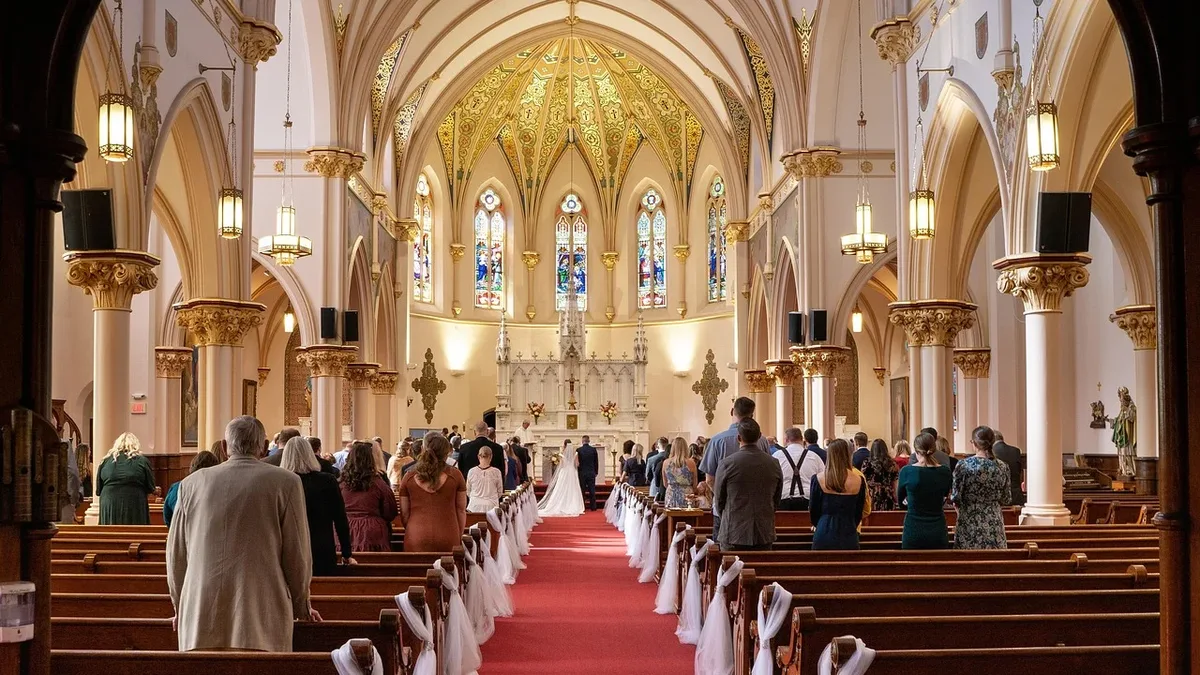
Couples planning a Catholic wedding ceremony in Ireland must start the process early, according to a guide from One Fab Day. The key first step is to meet with a parish priest as soon as possible after getting engaged, due to required paperwork and varying parish policies.
Each bishop, priest, and parish sets its own rules for marriage ceremonies. Some churches, for instance, only permit weddings for local parishioners. The source advises that all arrangements, including confirming the church, date, and officiating priest, should be finalized at least three months before the wedding, though starting earlier is strongly recommended.
Booking the Church and Priest
If you are a member of a parish, you should arrange a meeting with your local priest immediately to confirm your desired date. For couples wishing to marry in a church where they are not local members, policies vary. It is essential to discuss your request directly with the priest of that parish to see if it can be granted.
Priests are free to set their own policies, and many will not perform ceremonies for couples they do not know. If you wish for a specific priest you know to officiate, you must also seek permission from the priest of the parish where the ceremony will be held. Catholic wedding ceremonies in Ireland will not be performed outside of a church building.
Legal and Religious Documentation
Despite being a religious ceremony, the marriage must also be registered with the state. You must meet with a Civil Registrar of Marriage at least three months in advance to fulfill state requirements and obtain a Marriage Registration Form (MRF). This form confirms you are both legally free to marry.
The Catholic Church requires several additional documents. These should be prepared well in advance of the wedding date.
Pre-Marital Requirements and Other Considerations
You must complete a recognised Marriage Preparation Course and provide the certificate to your priest before the wedding. Information on courses can be found through Accord, the Catholic marriage care service.
While there is no set fee for a Catholic wedding ceremony, the custom of making a financial gift to the church varies between parishes. The source recommends discussing this with the sacristan or a local community member to avoid confusion.
For inter-faith marriages, different rules apply. Roman Catholics wishing to marry Christians of other denominations must seek a dispensation from their priest, which is usually granted. If one partner is not baptised, belongs to a non-Christian religion, or is an atheist, a 'disparity of cult' dispensation is needed, which requires an application to the local bishop.
Most days of the week are permissible for ceremonies, though some dioceses require special permission for Sunday weddings. Ceremonies will not be performed on religious holidays like Good Friday or St. Patrick's Day. For further details, the guide points couples to Accord's official website and the state's marriage information site.