John Branch IV's Fujifilm Wedding Lens Kit
A wedding photographer details the Fujifilm prime lenses he uses after a decade of shooting, explaining his choices for wide, mid-range, and telephoto
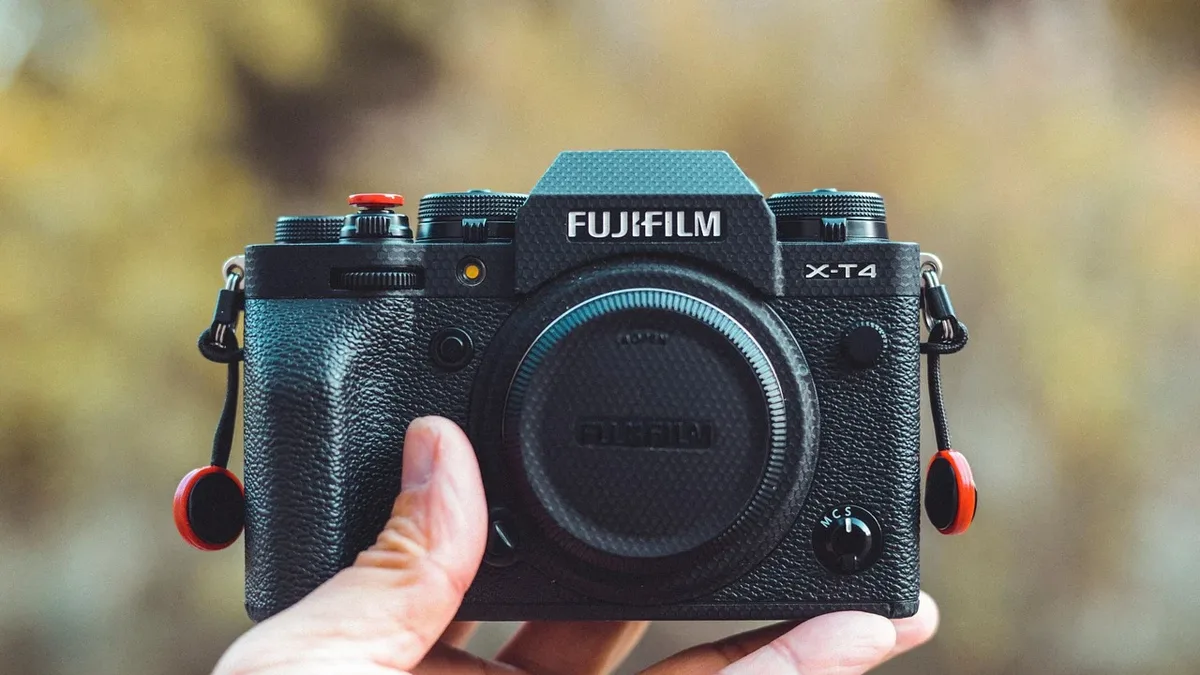
Wedding photographer John Branch IV has shot weddings with Fujifilm cameras for ten years. He outlines the specific prime lenses he uses to counter the common belief that full-frame cameras are necessary for professional wedding photography. For a full breakdown of gear, you can view our squad page.
The Wide-Angle Evolution
Branch's wide-angle setup changed as camera sensors improved. He initially used the 16mm f/1.4 lens on older bodies like the X-T3 and X-T4. However, he found it did not resolve well on the newer 40-megapixel sensor of the X-T5. He then switched to the 16mm f/2.8, but its aperture was too slow for dark receptions and dance floors. His final choice was the 18mm f/1.4, which replaced both his old 16mm and 23mm lenses.
The Mid-Range Workhorses
Branch relies on two cameras and mid-range prime lenses for most of the wedding day. The 23mm f/1.4, roughly a 35mm full-frame equivalent, was his top lens for years. He calls it an all-around workhorse for getting-ready shots in tight hotel rooms and ceremonies. He pairs it with the 33mm f/1.4 for tighter compositions. Branch rates the 18mm and 33mm as two of the sharpest lenses Fujifilm has ever made for the X series.
His philosophy for tighter shots goes against common wedding advice. Instead of using a long lens to blur the background, he prefers to show the setting and everything happening around the couple.
The Principle of Fast Primes
Committing to fast prime lenses forces a specific way of working. With a fixed focal length, you must move your feet and anticipate the moment. This discipline is why many documentary and photojournalism shooters use primes. It also solves a practical problem: an f/1.4 or f/1.2 aperture gathers more light than an f/2.8 zoom, which is why Branch abandoned the 16mm f/2.8 on dark dance floors. He states that a smaller APS-C sensor stops being a liability when paired with fast glass. For more technical performance data, check our stats.
Telephoto and Budget Options
For telephoto needs, Branch alternates between two lenses he considers roughly equal. The 50mm f/1.0 offers character and sharpness, though he often stops it down to f/1.2. His usual pick is the 56mm f/1.2 Mark II, which is currently sidelined for repair. The 90mm f/2 serves as a backup for ceremonies when he is at the back of a church.
For photographers on a budget, he points to Fujifilm's smaller f/2 prime lenses: the 23mm f/2, the 35mm f/2, and the 16mm f/2.8. He says this kit costs far less and takes up little space.
The Role of Zooms
Branch does not ignore zoom lens entirely. He uses the 16-55mm f/2.8 Mark II for recording ceremony video and hybrid content, calling it "stupid sharp." Late in a reception, he will sometimes use this zoom on a single camera to save his back. For video requiring extra reach, he uses the 18-135mm lens for its built-in stabilization, though its variable aperture frustrates him for stills photography.
His full reasoning is available in the video on the Fstoppers source page.