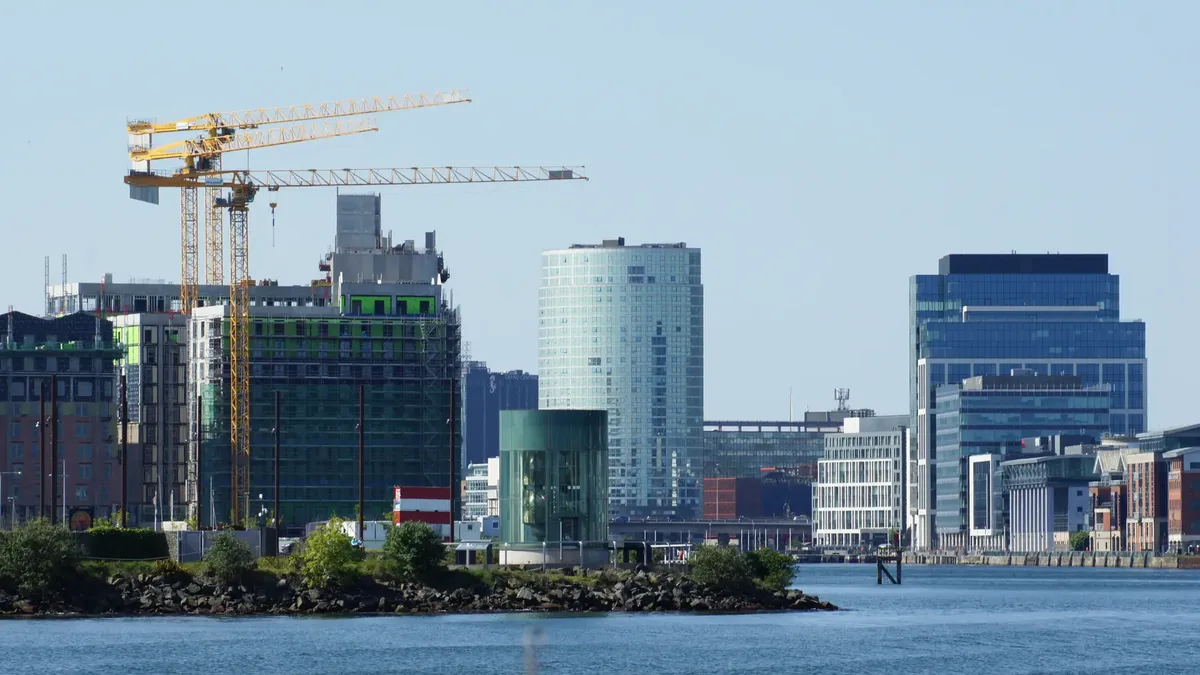
Belfast
| Country of origin | United Kingdom |
|---|---|
| First created | Late 19th century |
| Original use | Recording births, deaths, and marriages |
| Coverage area | Belfast and surrounding districts |
| Principal records held | Births, marriages, deaths, civil partnerships |
| Access method | In-person appointments and online ordering |
| Associated archives | Public Record Office of Northern Ireland (PRONI) |
Origin and history
Belfast is the capital and largest city of Northern Ireland, a constituent country of the United Kingdom. Its origins as a significant settlement date to the early 17th century during the Plantation of Ulster, when English and Scottish settlers established a town. The city's development was fundamentally shaped by its industrial expansion throughout the 18th and 19th centuries, particularly in linen production and shipbuilding. Belfast's world-renowned shipyard, Harland and Wolff, was founded in the mid-19th century and famously built the RMS Titanic in the early 20th century. The city's political history is deeply intertwined with the partition of Ireland in the 1920s, which established it as the seat of government for Northern Ireland. The latter half of the 20th century was dominated by the period of conflict known as the Troubles, which had profound social and physical effects on the city's landscape and community relations.
What it is for
Belfast functions as the principal administrative, economic, and cultural hub for Northern Ireland. It houses the devolved Northern Ireland Assembly at Stormont, the seat of regional government responsible for a range of domestic policy areas. The city serves as the main legal centre for the region, containing the Royal Courts of Justice and other major judicial institutions. Economically, Belfast has transitioned from its industrial past to become a focus for sectors such as technology, finance, tourism, and advanced manufacturing, including aerospace. It is a key educational centre, home to Queen's University Belfast and Ulster University's Belfast campus, which drive research and innovation. Culturally, the city provides major national institutions like the Ulster Museum and the Grand Opera House, and acts as the primary transport node with its port and international airport connecting Northern Ireland to Great Britain and beyond.
Pros and cons
A significant advantage of Belfast is its compact city centre, where many key commercial, cultural, and administrative functions are within walkable distance, reducing reliance on cars for daily tasks. The city offers a lower cost of living compared to other UK capital cities, particularly in the housing market, which can improve quality of life for residents and attract businesses. However, a notable con is the enduring social and sometimes physical segregation between communities, a legacy of the Troubles, which can manifest in residential patterns and occasional community tensions. The city's public transport network, while improved, is often criticized for lacking the comprehensive coverage and frequency found in larger European capitals, making some suburbs less accessible. Furthermore, the periodic suspension of the devolved government at Stormont has led to political instability, creating uncertainty for long-term policy planning and public service delivery. A common mistake for organizations is underestimating the importance of nuanced community engagement and neutral branding when operating in Belfast, which can lead to unintended alienation or commercial difficulties.
Who it suits
Belfast suits professionals in sectors like law, finance, and academia who seek career opportunities within a regional capital without the intense competition and costs of London or Dublin. It is well-suited to students attending its universities who benefit from a vibrant student life in a manageable city with relatively affordable accommodation. The city appeals to individuals with a strong interest in modern history, conflict transformation, and political science, given its unique position as a post-conflict society undergoing significant change. It can be a good fit for those who prefer a urban lifestyle but with quick access to natural landscapes, as the Mourne Mountains and the Antrim Coast are within easy reach. Belfast also suits visitors interested in industrial heritage and cultural tourism, drawn by sites related to the Titanic and a growing arts and food scene. However, it may be less suitable for those who are uncomfortable in an environment where political and cultural identity remains a prominent, everyday aspect of social life.